
Local Governance · December 4, 2025
Subsidiarity: The Power of Local Governance
Authority that drifts upward leaves participation, ownership, and legitimacy behind. Subsidiarity is strategic localization — the recognition that self-governance begins at the smallest scale.

The digital frontier is saturated.
The career ladders are crowded. The metaverse never quite materialized. Social feeds are louder than ever, yet strangely hollow. A generation of ambitious, high-agency individuals optimized for global scale — building software platforms, trading digital assets, growing audiences measured in the millions. And in the process, something more powerful was quietly neglected.
The physical world.
Across the country, the most consequential infrastructure in America has been sitting in plain sight: city council chambers, planning commissions, school boards, county water districts. While national politics turns theatrical and digital life becomes algorithmic, the only arena where a single person can still exercise 1:1 leverage over reality remains stubbornly local.
And the signs are everywhere.
In Colorado, Douglas County voters recently debated whether to pursue Home Rule status — a structural shift that would allow the county to draft its own governing charter and assume greater local authority rather than operating strictly under state-imposed frameworks. Supporters framed it as reclaiming autonomy from “one-size-fits-all” mandates. Critics warned of unintended consequences. But beneath the debate was something deeper: a recognition that governance feels too distant, too detached from lived experience.
This is not isolated. Across the country, towns and counties are reexamining how decisions are made and who makes them. The language differs — incorporation, charter commissions, school board reform, zoning battles — but the instinct is similar. Authority has drifted upward. Legitimacy has thinned. And citizens are beginning to feel the gap.
The principle beneath the instinct
The political philosophy that undergirds this instinct has an old name: subsidiarity.
Subsidiarity holds that matters should be handled by the smallest, lowest, or least centralized authority capable of addressing them effectively. It is not anti-government. It is anti-detachment. It recognizes that those closest to a problem often understand it best — and that participation in governance cultivates responsibility.
When authority centralizes excessively, participation declines. When participation declines, ownership dissipates. When ownership dissipates, institutions hollow out.
Local governance is not trivial governance. It is formative governance. Zoning codes determine whether a grocery store can open in walking distance. School boards determine whether curriculum emphasizes competence or ideology. Planning commissions determine whether housing is attainable or artificially constrained. Water boards determine infrastructure stability. Property tax assessments shape whether families stay or leave.
These are not symbolic levers. They shape daily life. And when citizens disengage from them, they do not disappear. They simply default to whoever shows up.
The empty room problem
Over the past two decades, many of America’s most capable individuals redirected their energy toward global markets and digital systems. That move made sense. Technology offered scale. Finance offered leverage. Attention offered status.
But while the brightest minds were optimizing code, something quieter was happening at home. Tuesday night council meetings were sparsely attended. Planning boards were filled by the few with time to participate. School boards became flashpoints only when controversy exploded.
The result was not dramatic collapse. It was drift.
In Texas, for example, the Houston Independent School District — one of the largest in the country — was placed under state control in 2023, with elected trustees replaced by appointed managers. Supporters argued that academic performance demanded intervention. Critics saw it as a dismantling of local authority. Regardless of where one stands, the episode demonstrates the fragility of local governance when trust erodes and oversight falters.
When local institutions weaken, higher authorities step in. Sometimes appropriately. Sometimes bluntly. Either way, subsidiarity contracts.

Reality versus simulation
For many high-achievers, modern “impact” feels abstract. A line of code can scale globally. A social media post can shape national conversation. But neither changes a local zoning ordinance. Neither allocates municipal funds. Neither rewrites a charter.
Digital influence is often influence over perception. Local governance is influence over matter.
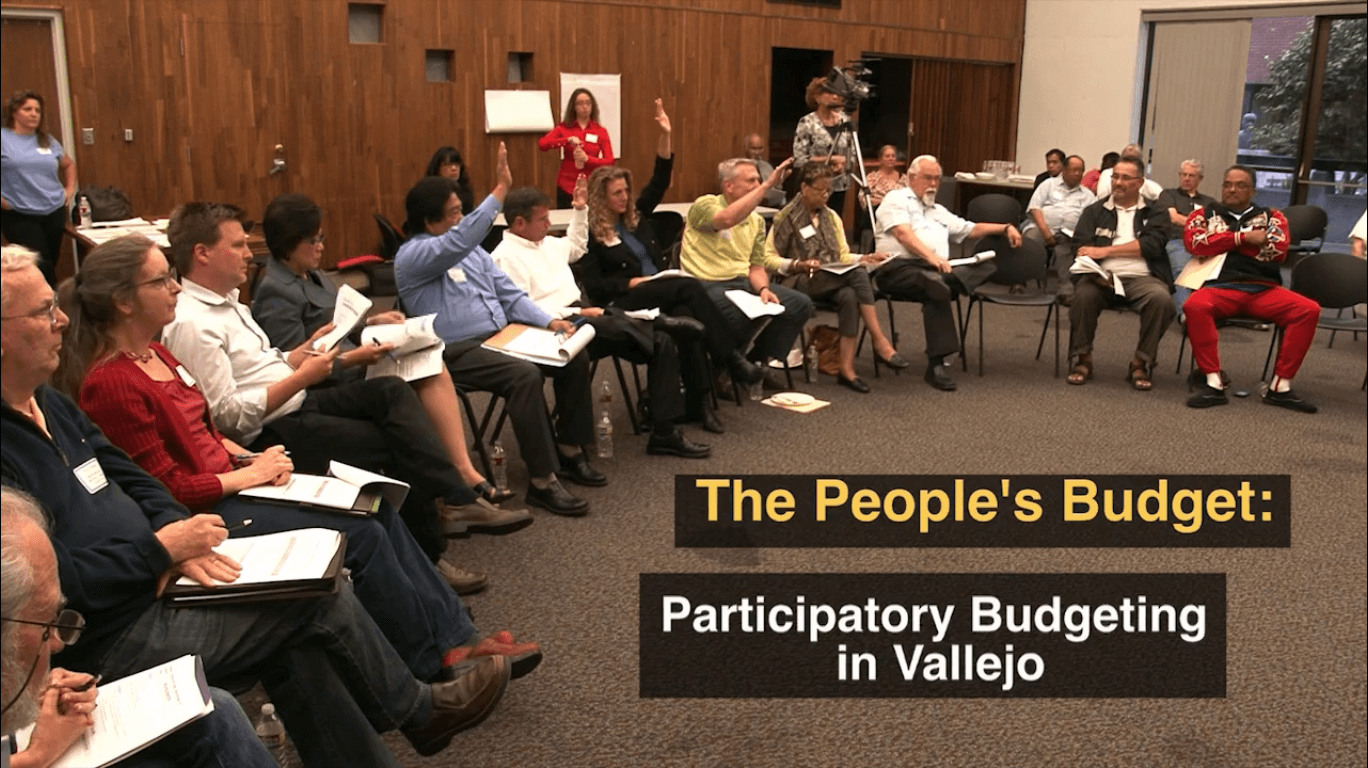
Participatory budgeting experiments in cities like Vallejo, California have shown what this looks like in practice. Residents gather to propose and vote on how a portion of city funds are spent — sidewalks, public safety measures, community projects. The process is imperfect, occasionally contentious, but unmistakably real. Decisions translate directly into physical changes in the city.
The difference between shouting online and passing a resolution in a council chamber is not subtle. One dissipates. The other builds.
Local government is the hard technology of civic life. It moves cranes. It clears permits. It sets property lines. It determines policing standards. It funds or defunds programs. It is slow, procedural, often tedious. But it is tangible. In a room of fifty people, one disciplined voice can alter the outcome.
The Home Rule frontier
The renewed interest in incorporation and Home Rule movements reflects something larger than administrative curiosity. It reflects a search for proximity.
Home Rule allows municipalities or counties to draft charters that tailor governance structures to local needs. It is subsidiarity operationalized. It acknowledges that rural communities, mountain towns, and suburban counties may not share identical priorities or constraints.
In Colorado and beyond, these movements are emerging not because citizens crave chaos, but because they crave alignment. They want authority and consequence to reside closer together.
This is the new frontier. If the 20th century was about moving to the city to find opportunity, the 21st century may be about staying in place and building opportunity through self-governance.
The metaphor is not romantic. It is practical. Small jurisdictions function more like speedboats than tankers. They can pivot. They can test policy experiments. They can preserve distinct character. But only if capable individuals are willing to enter the room.
The psychological dimension
Subsidiarity is not only structural. It is psychological.
When citizens engage locally, they experience the relationship between action and outcome. They see votes tallied. They watch budgets shift. They witness ordinances implemented. This proximity cultivates responsibility. It reinforces the sense that order is constructed, not inherited.
Centralization, by contrast, trains spectatorship. When authority feels distant, citizens externalize. They complain upward. They disengage downward. Over time, resentment replaces participation.
A republic cannot sustain itself on spectators.
The civic rebel
There is a quiet aesthetic shift underway. For some, the most subversive act in 2026 is not viral commentary but fiscal literacy. Not digital outrage but zoning reform. The Civic Rebel is the individual who shows up to the Water Board meeting and demands transparency. Who reads the charter draft. Who volunteers for the Planning Commission.
It is not glamorous work. It is not rewarded by algorithms. But it is high leverage.
The tragedy of the past thirty years is not simply polarization. It is that we convinced many capable people that local affairs were boring. That prestige existed elsewhere. Meanwhile, the most intimate aspects of daily life — land use, schooling, taxation — were left to inertia.
That era is closing.
As digital spaces grow noisier and national politics grows more scripted, the Right Room becomes infinitely more valuable. The Town Hall is not a relic. It is one of the last arenas where influence remains proportional to presence.
The next frontier is not an exit to abstraction. It is an entry into the room.
Subsidiarity is not nostalgia. It is strategic localization. It is the recognition that self-governance begins at the smallest scale — and that a nation that forgets how to govern locally eventually forgets how to govern at all.
The frontier is not somewhere else. It is at the end of your driveway. And the leverage is waiting. What are you going to do about it?